
Maintaining Your Pole Building: Seasonal Checklist
A practical, season-by-season maintenance guide to keep your pole building performing and looking great for decades in Delaware and Maryland's climate.

A well-built pole building should last 40 to 50 years or more with minimal maintenance. But "minimal" is not the same as "zero." Spending a few hours each season on basic upkeep will prevent small issues from turning into expensive repairs, and it keeps your building looking sharp year after year.
Here is a straightforward, season-by-season checklist based on what we have seen matter most for pole buildings in Delaware and Maryland.
Spring: Post-Winter Inspection
Spring is your most important maintenance season. Winter puts the most stress on any building, and spring is when you catch problems before they get worse.
Exterior Check
Walk the full perimeter of your building and look up. You are checking for panels that may have lifted or shifted during winter storms, any loose or missing screws (especially on exposed fastener panels), gaps or daylight showing at panel overlaps, and any debris that collected against the building walls over winter. Clear away any leaves, mulch, or other organic material that piled up against the base of the building. Material sitting against your siding holds moisture and can lead to corrosion at the panel edges over time.
Roof Inspection
From the ground, look at your roof for any panels that appear bent, lifted, or misaligned. Check the ridge cap for gaps. If you have roof-mounted vents or turbines, make sure they are still secure and spinning freely. Look at your gutters if you have them. Winter ice can pull gutter brackets loose and spring rains will reveal any drainage problems quickly.
Doors and Hardware
Open and close every overhead door and walk door. Lubricate the tracks and hinges on overhead doors with a silicone-based spray. Check the weather stripping on the bottom of overhead doors and around walk doors. Replace any that is cracked, torn, or compressed flat. Test your door openers if you have them. Winter temperature swings can affect the travel limits, so re-adjust if the door is not closing fully or is hitting the floor too hard.
Foundation and Floor
Look at your concrete slab for any new cracks that appeared over winter. Small hairline cracks are normal and cosmetic. Cracks wider than a quarter inch or cracks that show vertical displacement (one side higher than the other) warrant a closer look. Check the junction where the slab meets the building walls. Gaps here can let water in. Sealant at this joint should be inspected annually and replaced as needed.
Summer: Clean and Protect
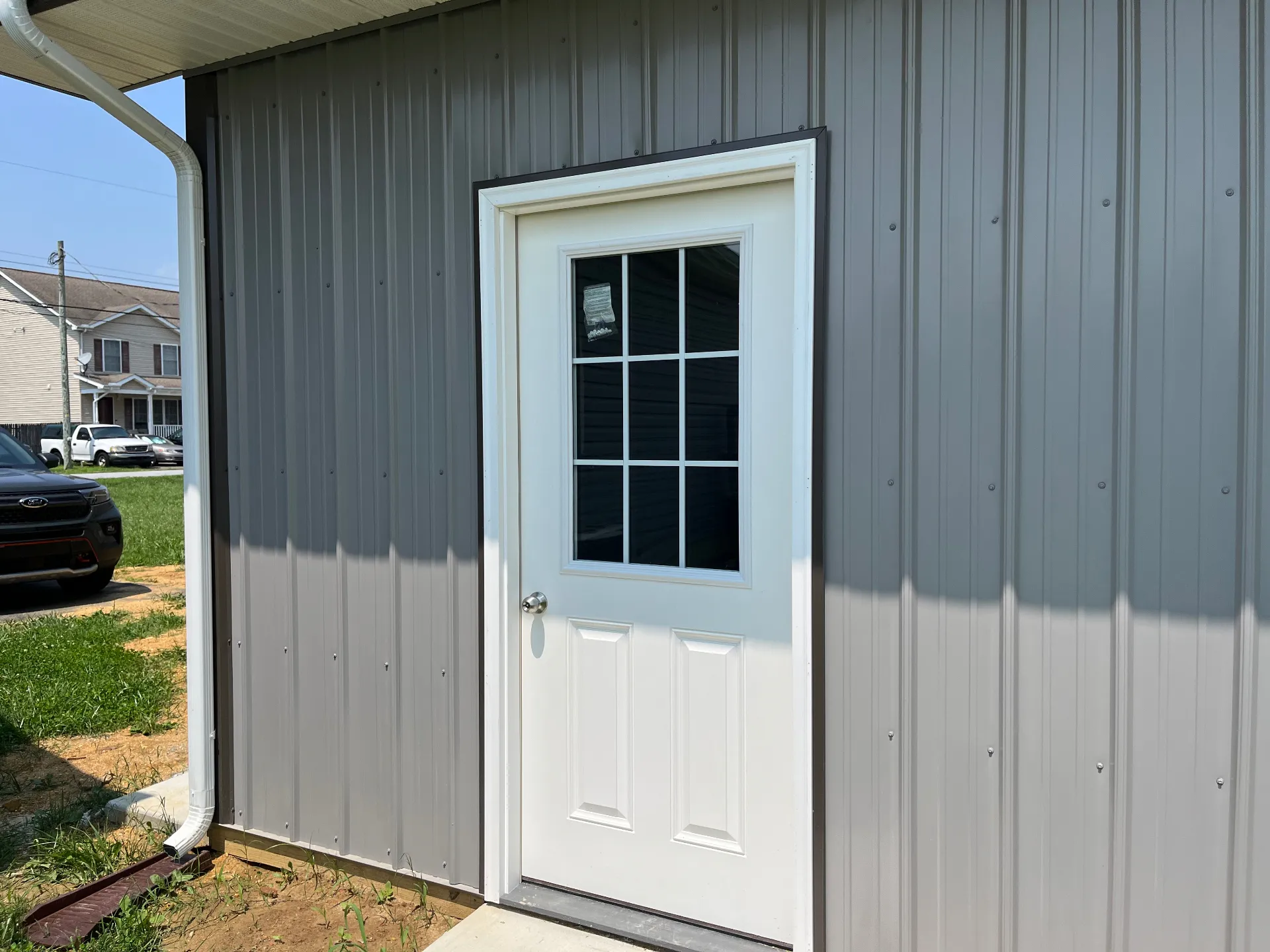
Summer is about cleaning, cosmetic touch-ups, and preparing for the heat.
Panel Cleaning
Once a year, wash your metal siding with a garden hose and a soft brush or pressure washer on a low setting. This removes dirt, pollen, and salt residue that builds up over time. In coastal areas like Sussex County and the Eastern Shore, this step is especially important because salt deposits accelerate paint degradation if left to sit. Use a mild detergent (dish soap works fine) and rinse thoroughly. Do not use abrasive cleaners or stiff wire brushes, as they can damage the paint finish.
Touch-Up Paint
Inspect panels for any scratches or chips in the paint, especially around doors and in areas where equipment might bump the walls. Small paint damage can be touched up with color-matched spray paint from your panel manufacturer. Addressing chips early prevents corrosion from starting at the exposed metal.
Ventilation Check
Make sure your building is ventilating properly. Soffit vents, ridge vents, and gable vents should be clear of debris and insect nests. Proper ventilation reduces moisture buildup inside the building, which protects stored equipment, prevents mildew, and reduces condensation dripping during temperature transitions.
Pest Inspection
Check for signs of birds, rodents, or insects making themselves at home. Birds love to nest in the gaps between panels and trim. Mice will find their way in through surprisingly small openings. Seal any gaps you find with appropriate materials. Steel wool works for small openings that mice might use. Trim closures (the foam strips that seal the gaps between panels and trim) should be intact.
Fall: Storm Prep
Fall maintenance in Delaware and Maryland is about getting ready for winter storms and the occasional hurricane or tropical system.
Storm Readiness
Check all panel fasteners one more time before storm season. A single loose screw can become a failure point where wind gets under a panel and peels it back. Verify that overhead door wind-load reinforcement (if installed) is in good condition. Check that walk doors latch and seal properly.
Drainage
Clean gutters and downspouts if you have them. Make sure the ground around your building still slopes away from the foundation. Over time, soil can settle and create low spots where water pools against the building. Add fill dirt if needed to maintain proper drainage.
Tree Maintenance
If you have trees near your pole building, fall is the time to trim back any branches that overhang the roof or could fall on the building during a storm. Dead limbs are the biggest risk. A falling branch can dent or puncture a metal panel, and the repair is more expensive than the trimming would have been.
Interior Prep
If your building is not climate-controlled, fall is a good time to check insulation for any damage, verify that electrical outlets and lighting are working (shorter days mean you will be using lights more), and make sure any stored vehicles or equipment are prepared for colder temperatures.
Winter: Minimal but Important
Winter maintenance is mostly about monitoring and responding to events.
After Snow
If you get significant snow accumulation on the roof, monitor it. Most pole building roofs are designed for local snow loads, but drifting can create concentrated loads that exceed design capacity. If snow drifts build up against one side of your building, clearing them prevents uneven loading.
Do not use metal tools to remove snow from your roof. They will scratch and damage the paint. A roof rake with a plastic blade or soft rubber edge is the right tool if you need to clear snow.
After Storms
Walk the exterior after any significant wind event. You are looking for the same things as the spring check: loose panels, missing screws, shifted trim. Catching storm damage early prevents water intrusion and further damage from subsequent storms.
Condensation
In unheated buildings, condensation is common during winter. This is normal physics: warm moist air hits cold metal panels and water forms. Good ventilation minimizes it, but some condensation is expected. If you are seeing excessive dripping, your ventilation may need attention. Adding or improving ridge vents and soffit vents is usually the fix.
The Simple Version
If the full seasonal checklist feels like a lot, here is the simplified version: wash the building once a year, check the screws and seals twice a year, clean the gutters in the fall, and do a visual inspection after every significant storm. That bare minimum will keep your pole building in good shape for decades.
A well-maintained pole building is a building that holds its value and avoids costly surprises. The time investment is small compared to the cost of ignoring maintenance until something fails.
Questions about maintaining your pole building, or need help with a repair? Give us a call. We are here to help.
**Related Reading:**
- 26 Gauge vs 29 Gauge Steel — Understanding your steel panels helps you know what to look for during inspections.
- Complete Guide to Pole Building Foundations — Foundation care starts with understanding how your building sits on the ground.
- Do You Need Post Protection? — The posts are the hardest part to maintain after the fact. Learn why protecting them at build time matters.
- Choosing the Right Siding — Different siding materials have different maintenance needs. Here is how to choose.
Ready to Start Your Project?
Get expert guidance and a custom quote for your pole building project.