
Do You Need Post Protection for Your Pole Building?
Learn why protecting your pole building's foundation posts is critical for long-term durability, and discover how Titan Guardian post protection can extend your building's lifespan by decades.
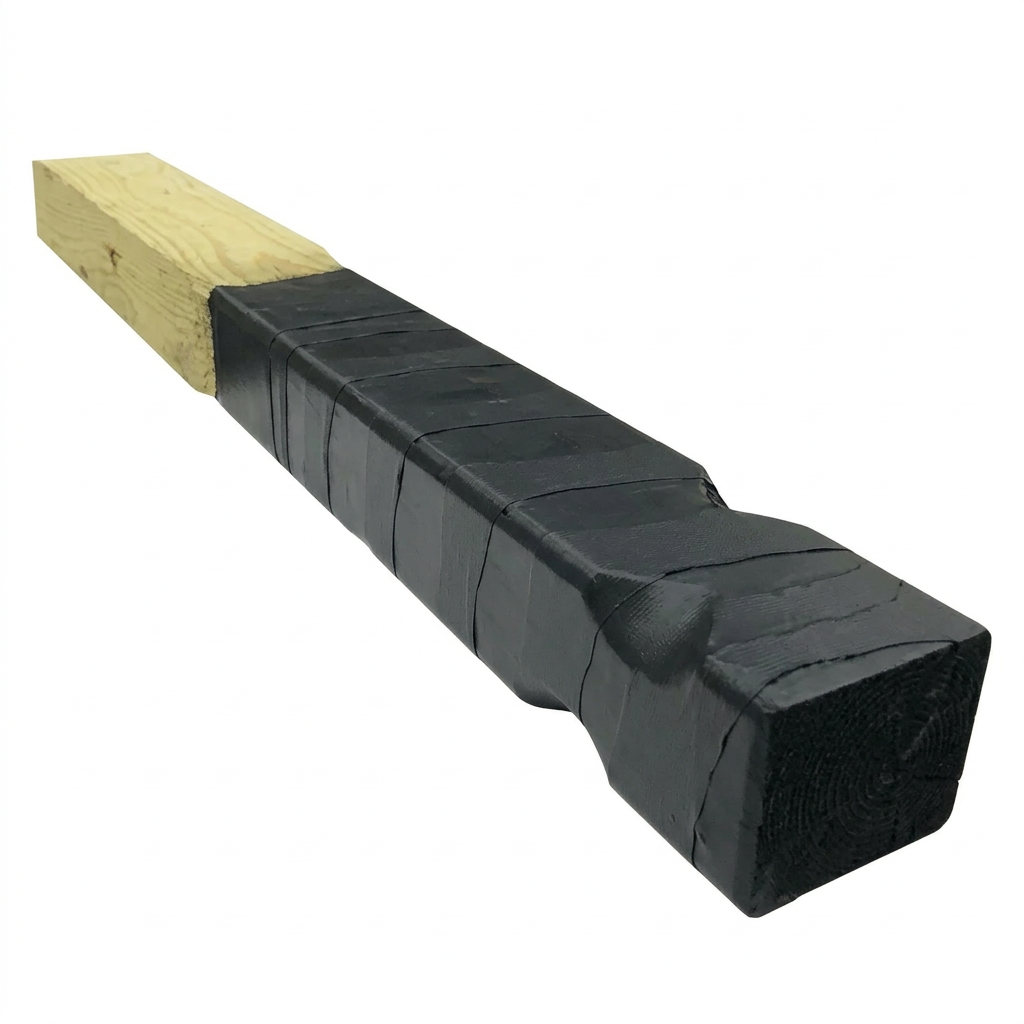
When people think about what holds a pole building together, they usually picture the steel panels on the outside or the trusses overhead. That makes sense. Those are the parts you can see. But the real backbone of your building is underground, and it is the part most likely to fail if it is not properly protected.
What Actually Happens at Ground Level
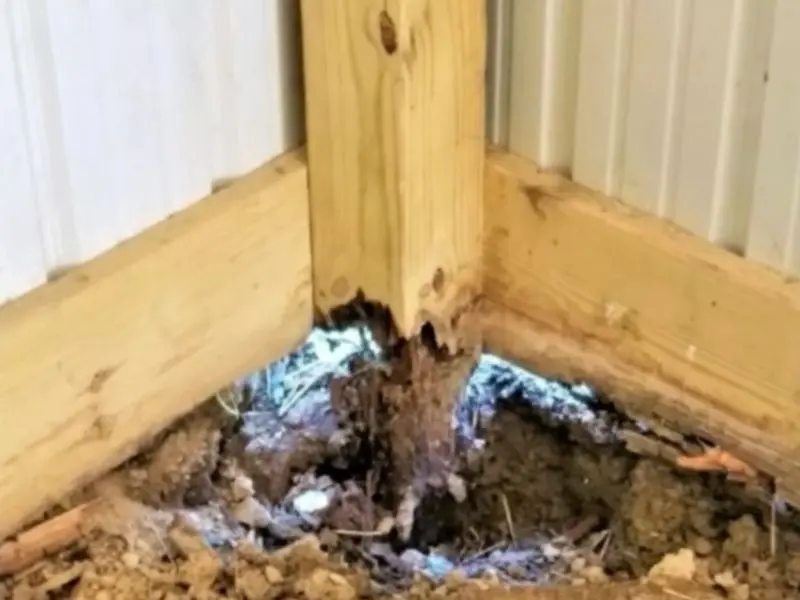
A rotted post showing typical ground-level decay — the damage starts where you can't see it
Every pole building sits on vertical posts set into the earth. These posts carry the full weight of your structure, transferring loads from the roof and walls down into the ground. They are doing critical structural work, and they are doing it in the worst possible environment.
The trouble zone runs from about six inches below the soil surface to six inches above it. This narrow band is where moisture, temperature swings, insects, and fungal decay all converge. The post is constantly cycling between wet and dry as rain soaks in and the sun bakes it out. Over years, that cycle breaks down even treated wood.
We have seen buildings that looked perfectly solid from the outside, but when you got down to ground level and pushed on a post, your thumb went right through it. The core was completely rotted out. That is not a maintenance issue. That is a structural emergency.
Why Pressure Treatment Is Not Enough
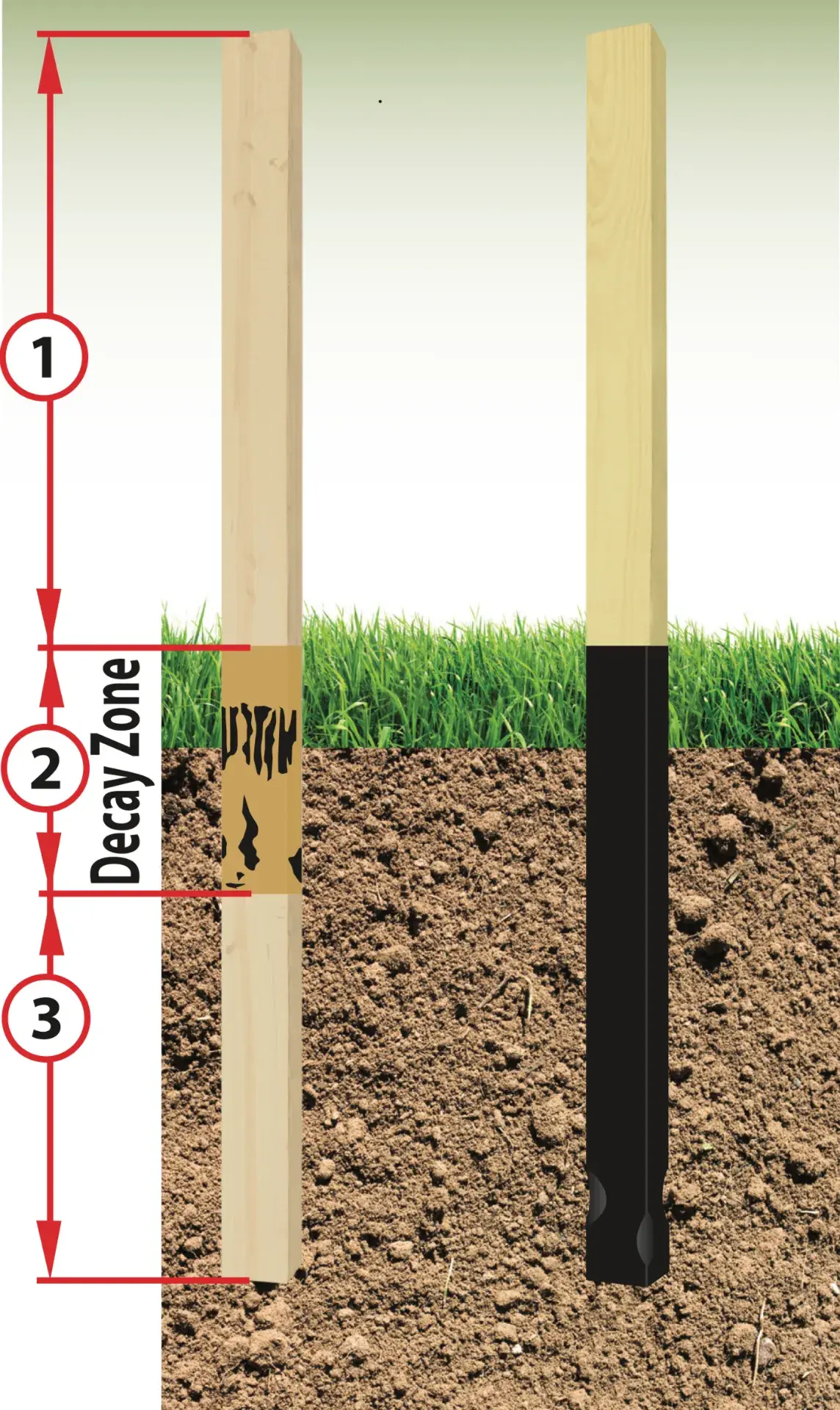
Solid posts only absorb treatment 1–2 inches deep — the untreated core is where decay begins
Most people assume that pressure-treated lumber solves this problem. It helps, but it does not solve it. Here is why.
When a solid post goes through the pressure treatment process, the chemicals only penetrate about one to two inches into the wood. The center of the post remains untreated. When moisture eventually works its way in (and it will), the decay starts from the inside out. The post can look fine on the surface for years while the interior quietly rots away.
In ideal conditions, a standard pressure-treated post might give you 15 to 20 years before significant decay sets in. Premium treatments might stretch that to 20 or 25 years. But in wet or coastal environments like we have across much of Delaware and the Maryland Eastern Shore, those numbers shrink. We have seen posts fail in under 15 years.
What People Have Tried (And Why It Has Not Worked)
Over the years, builders have tried various methods to extend post life. Pouring concrete around the base of the post seems logical, but it actually traps moisture against the wood and accelerates decay. Tar and asphalt coatings work for a few years, then crack and peel, creating pockets where water collects. Gravel backfill improves drainage, which helps, but it does not stop moisture contact or insect access.
None of these approaches address the fundamental problem: as long as the wood is touching the ground, decay is inevitable. It is just a question of when.
How Titan Guardian Changes the Equation
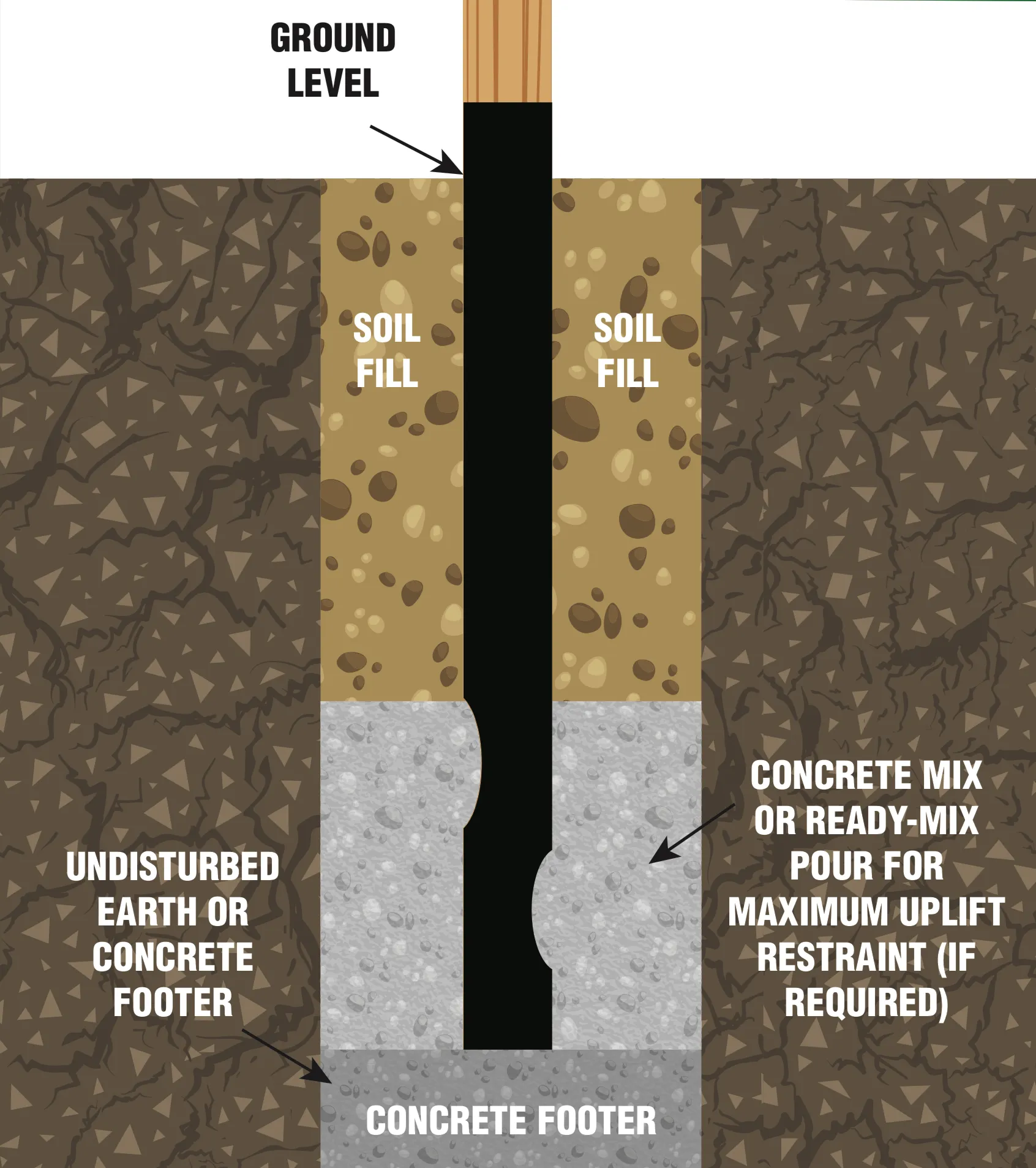
Titan Guardian's patented multi-layer barrier system eliminates ground contact entirely
Titan Guardian takes a completely different approach. Instead of trying to slow down decay, it eliminates the conditions that cause it. The system wraps the below-grade portion of each post in a multi-layer barrier that prevents any ground contact whatsoever.
The system uses a heavy-duty polyethylene outer wrap for mechanical and UV protection, a bitumen-penetrated moisture barrier for waterproofing, closed-cell foam insulation, and a seamless bottom seal. It is factory-applied for consistent quality, protected under US Patent #7,506,859.
The result is simple: if moisture, insects, and soil never touch the post, the post does not decay. The decay zone is eliminated entirely.
Better Posts, Better Protection

Every Titan building uses 3-ply glulam posts wrapped in Titan Guardian protection
We do not just protect the posts. We start with better posts. Every Titan building uses 3-ply glulam (glue-laminated) posts as standard. These are three individual 2x6 boards, each pressure-treated separately, then laminated together.
Why does that matter? Because when you treat three thinner boards individually, the chemical penetrates 100% of each board. There is no untreated core hiding inside. The result is a post that is engineered to be stronger than solid wood, with complete chemical protection throughout.
Combine that with Titan Guardian's barrier system and you have a foundation designed to last 50 years or more. That is not marketing language. That is the engineering reality of eliminating the two primary failure modes: incomplete treatment and ground contact.
When Post Protection Is Worth It
Honestly, we think post protection makes sense for nearly every pole building. But it is especially important if you are building a barndominium or any structure where people will live or work full-time, a commercial building where structural failure has liability implications, anything in a coastal area or on a property with a high water table, or any building where you are investing serious money and want it to last.
In our part of the country, the climate works against unprotected posts. High humidity, salt air near the coast, freeze-thaw cycles, and heavy seasonal rain all accelerate decay. This is not a dry-climate, low-risk situation. This is the kind of environment where post protection earns its keep.
The Cost of Not Protecting
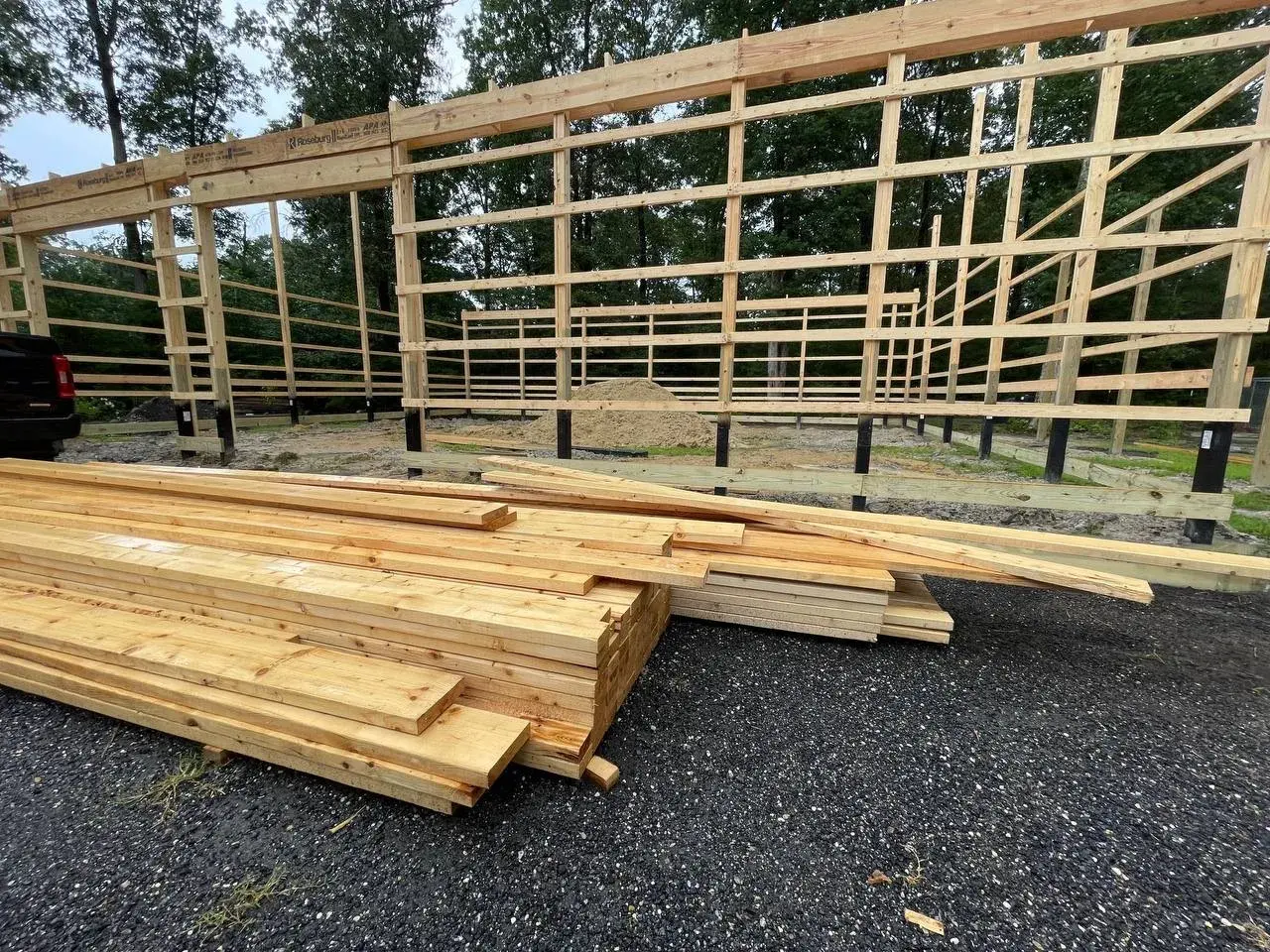
Protecting posts at build time costs a fraction of replacing them later
Replacing a failed post in an existing building is not a simple repair. It typically means jacking up the structure, installing temporary supports, removing the old post, setting a new one, and hoping the building has not shifted in the process. Per-post replacement costs can run $3,000 to $8,000 or more, and the disruption to whatever you are using the building for can be significant.
Compare that to the one-time cost of Titan Guardian at construction, which requires zero maintenance and protects for decades. It is one of those upgrades where the math is hard to argue with.
Better-built structures also tend to qualify for lower insurance premiums, and documented post protection adds real resale value. Buyers pay more for buildings they know are built to last.
The Bottom Line
The real question is not whether you need post protection. It is whether you can afford to skip it. When the posts are the structural foundation of your entire building, and replacing them is expensive, disruptive, and sometimes not even fully successful, protecting them from day one is just smart building.
Ready to build with confidence? Contact us to learn more about how Titan Guardian protects your investment for the long haul.
**Related Reading:**
- Complete Guide to Pole Building Foundations — Learn how the foundation system under your posts works together with post protection to create a building that lasts decades.
- 26 Gauge vs 29 Gauge Steel — The steel panels that protect the exterior of your building. Learn which gauge is right.
- Choosing the Right Siding — Metal siding, board and batten, and more. How we finish the exterior of your pole building.
- Seasonal Maintenance Checklist — Keep your posts, panels, and foundation performing for decades with this seasonal guide.
Ready to Start Your Project?
Get expert guidance and a custom quote for your pole building project.