
Choosing the Right Siding for Your Pole Building
How to select siding materials that will perform best in Delaware and Maryland's coastal climate, from traditional metal panels to board and batten and vinyl options.
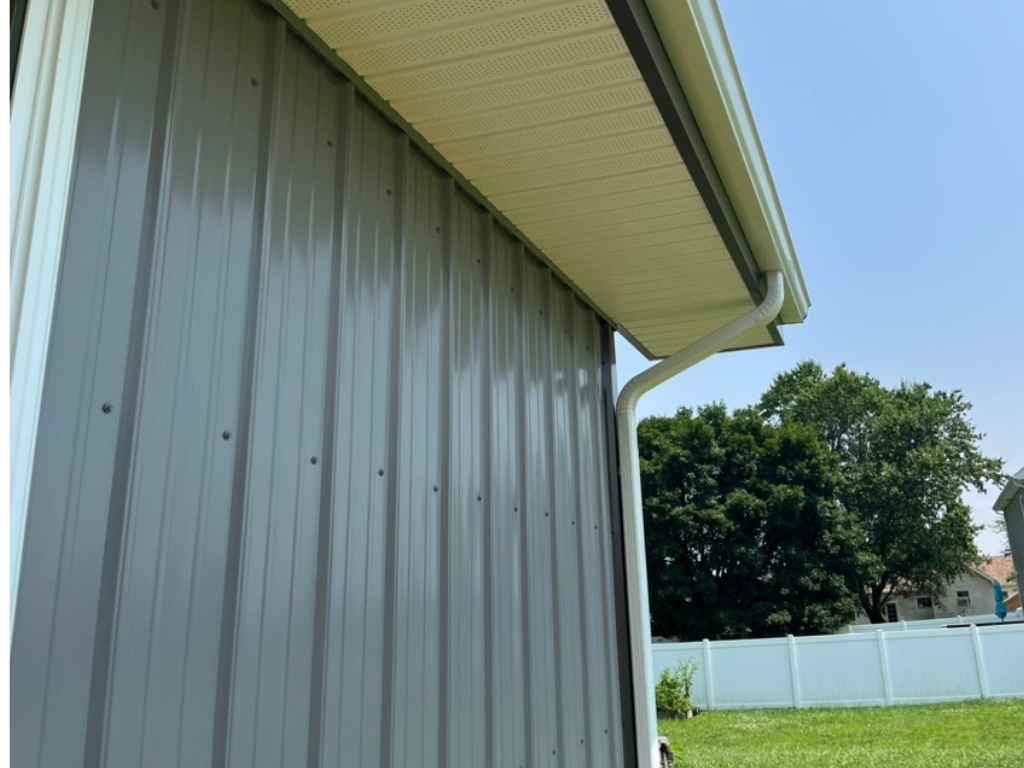
The siding on your pole building does more than make it look good. It is your primary weather barrier, your first line of defense against wind, rain, UV exposure, and salt air. Choosing the wrong siding for your climate means dealing with premature fading, corrosion, or damage that costs more to fix than the upgrade would have cost in the first place.
Here on the Delmarva Peninsula, our climate is particularly demanding on exterior materials. We deal with coastal humidity, salt air (especially in Sussex County and the Eastern Shore), hurricane-force wind events, hail, and temperature swings that cycle between freezing winters and humid summers. Not every siding material handles all of that equally well.
Traditional Metal Siding: The Workhorse
Metal siding is the standard for pole buildings, and for good reason. It is durable, low-maintenance, fire-resistant, and goes up fast. But not all metal siding is the same.
Exposed Fastener Panels (Ribbed Metal)
This is the classic pole building look. Panels are screwed directly through the face into the girts, with visible screw heads running in lines across the surface. Exposed fastener panels are the most economical option and they perform well for agricultural buildings, storage facilities, and workshops.
The main consideration with exposed fastener panels is the screws themselves. Each screw penetration is a potential water entry point. We use neoprene-washered screws and install them to the manufacturer's torque specifications. Over-driven screws crush the washer and leak. Under-driven screws do not seal properly. It sounds simple, but this is one of the most common installation errors we see on other builders' projects.
Standing Seam Metal
Standing seam panels interlock at the seams with no exposed fasteners. The panels "float" on clips, allowing them to expand and contract with temperature changes without stressing the fastener holes. This eliminates the most common failure point of metal siding.
Standing seam costs more than exposed fastener, typically 25 to 40% more installed. But for barndominiums, high-visibility commercial buildings, and any structure where long-term appearance matters, the upgrade is worth considering. The clean lines and hidden fasteners give a more refined, architectural look.
Paint Systems Matter
Whether you go with exposed fastener or standing seam, the paint system on your metal panels is critical for coastal Delaware and Maryland applications. We use Sherwin-Williams Kynar 500 fluoropolymer coatings on our Titan Defender panels. This is the same paint technology used on commercial high-rises and airports. It resists UV fading, chalking, and salt air corrosion far better than standard polyester paint systems.
The difference between a Kynar-coated panel and a standard painted panel after 15 years in coastal air is dramatic. One still looks close to original. The other looks washed out and may be showing early signs of corrosion at fastener points.
Board and Batten Siding
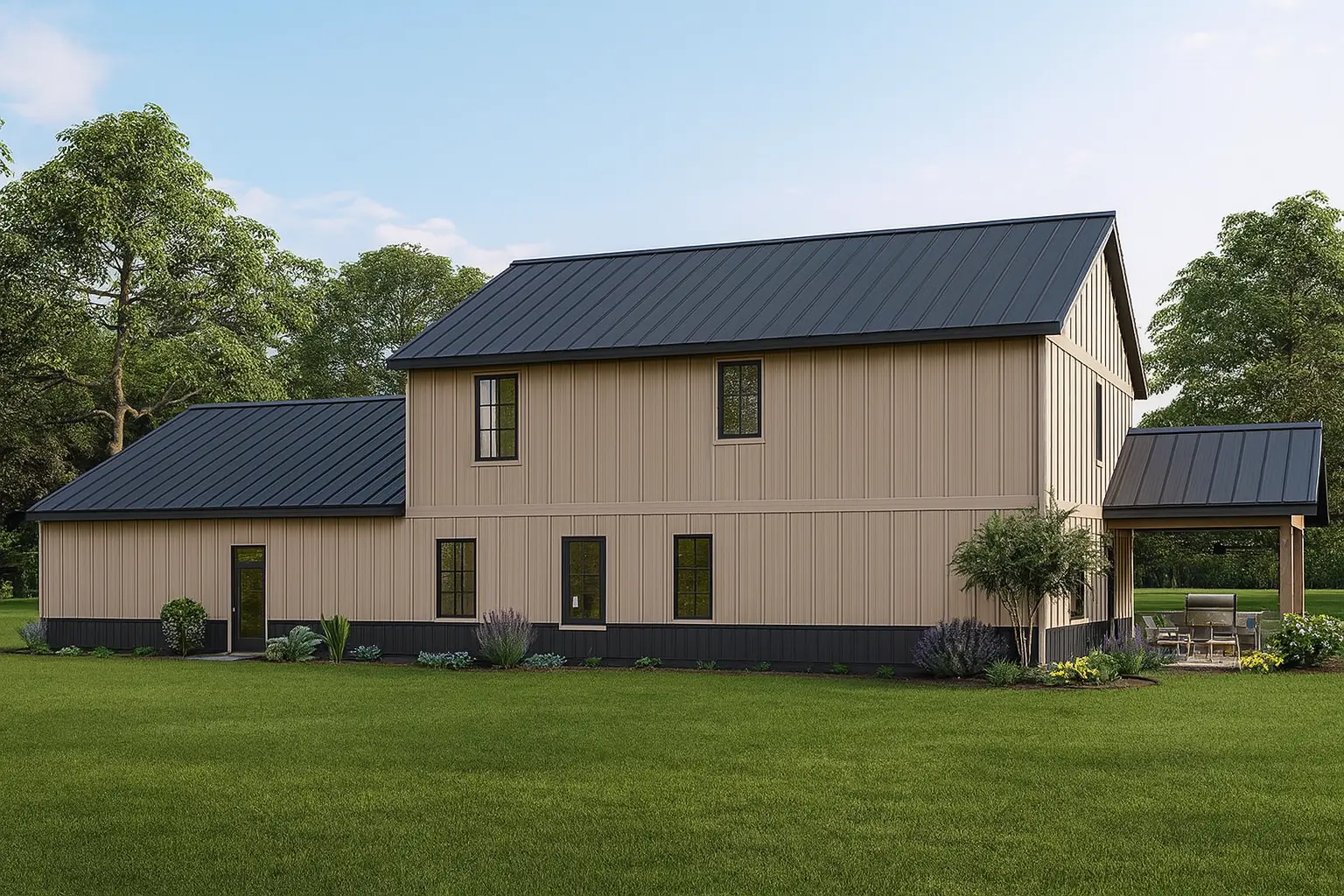
Board and batten has become increasingly popular for barndominiums and residential pole buildings. It gives a farmhouse-modern aesthetic that works well in Delaware's rural landscapes.
For pole buildings, board and batten siding is typically installed over a secondary weather barrier (housewrap or similar) that goes on the girts first. The boards themselves can be real wood, engineered wood (like LP SmartSide), or metal panels formed to mimic the board and batten profile.
Real wood board and batten looks beautiful but requires ongoing maintenance. In our humid coastal climate, wood siding needs regular sealing or staining, and it is susceptible to rot, insect damage, and warping if not properly maintained.
Engineered wood products like LP SmartSide offer the look of real wood with better moisture resistance and less maintenance. They come pre-primed and hold paint well. For barndominiums where the aesthetic matters but you do not want to re-stain every few years, engineered wood is a solid middle ground.
Metal board and batten panels give you the look with essentially zero maintenance. They cost more per square foot but eliminate the ongoing upkeep costs entirely.
Vinyl Siding
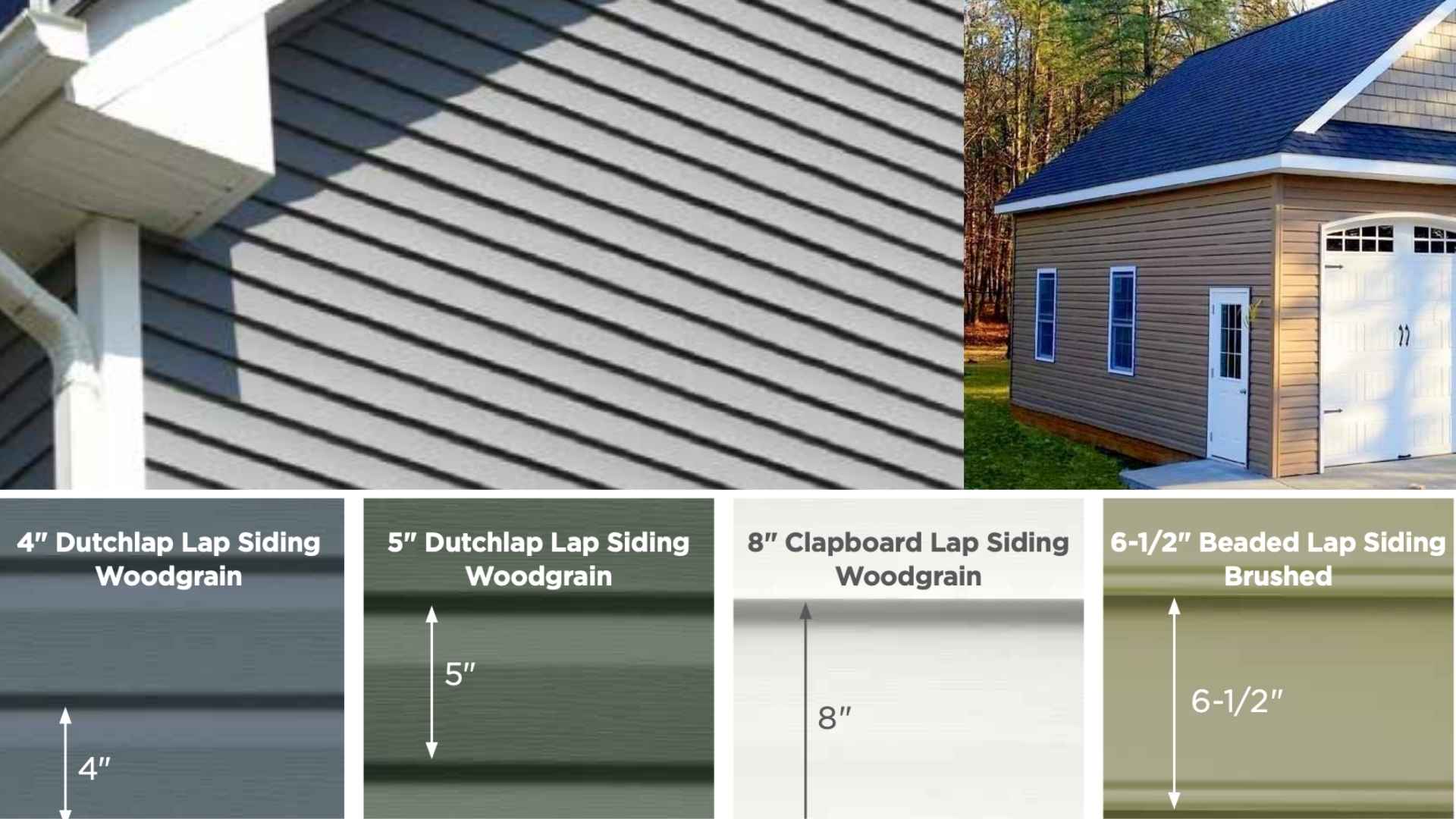
Vinyl siding is an option for pole buildings, particularly barndominiums where a residential appearance is desired. It is inexpensive, available in many colors and profiles, and requires almost no maintenance.
The downsides in our climate: vinyl can become brittle in extreme cold and crack on impact, it can warp or melt if exposed to reflected heat (from windows or neighboring buildings), and high winds can get underneath improperly installed panels and tear them off.
For barndominiums that want a residential exterior look at a lower price point, vinyl can work. But we typically recommend it as a supplement (on specific walls or in protected areas) rather than as the primary cladding for the entire building.
Wainscoting: The Best of Both Worlds
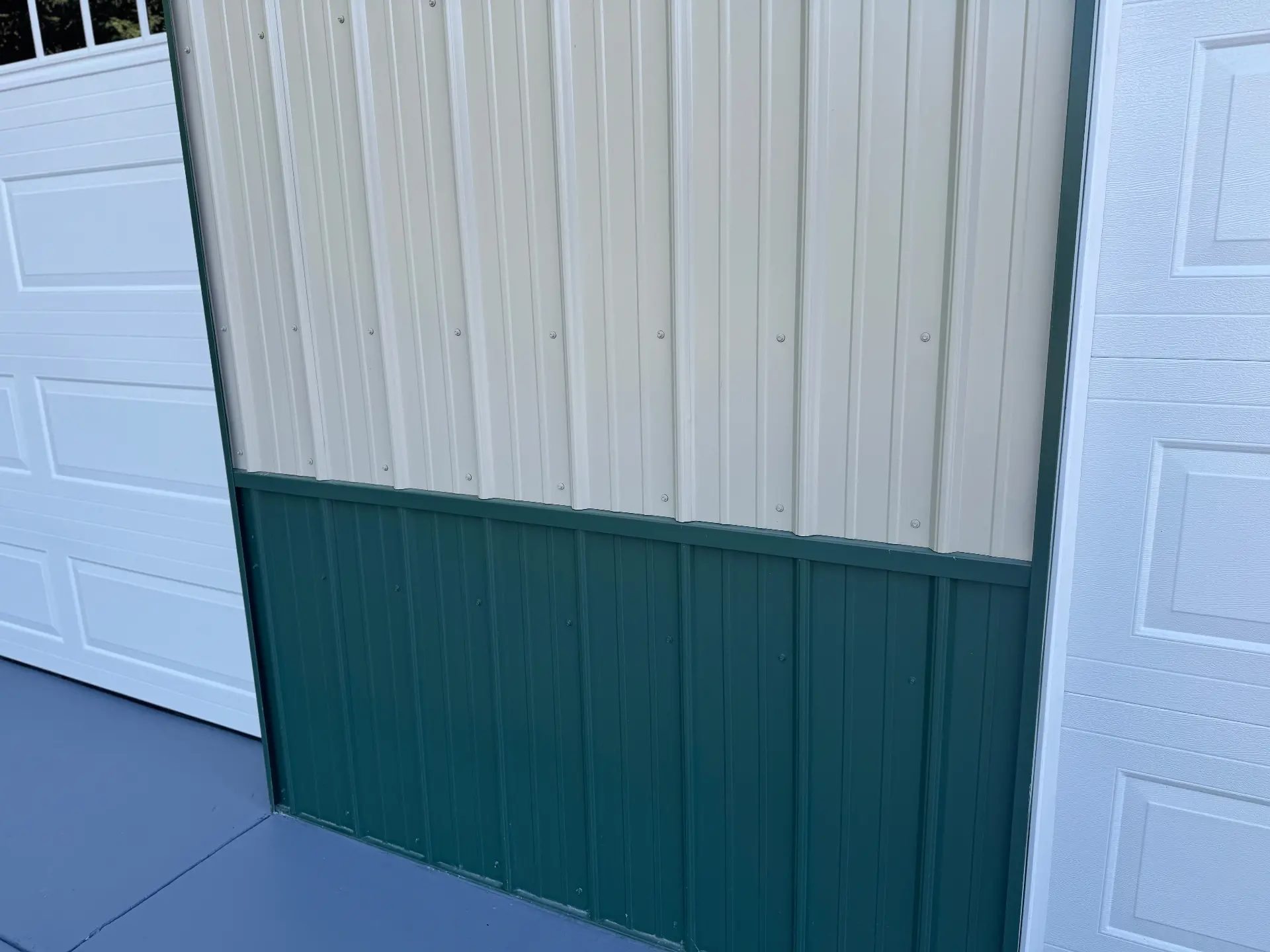
One approach we use frequently is wainscoting, where the bottom 3 to 4 feet of the building uses a heavier-gauge or different style panel, and the upper portion uses standard panels. This puts the toughest material where it takes the most abuse (vehicle doors opening into walls, equipment bumping, splash-back from rain) and keeps costs reasonable on the upper sections.
For agricultural and equestrian buildings, we often do a steel wainscot on the lower section with standard metal panels above. For barndominiums, a stone or masonry veneer wainscot with board and batten or metal above creates a high-end look that holds up well.
Our Recommendation for Delaware and Maryland
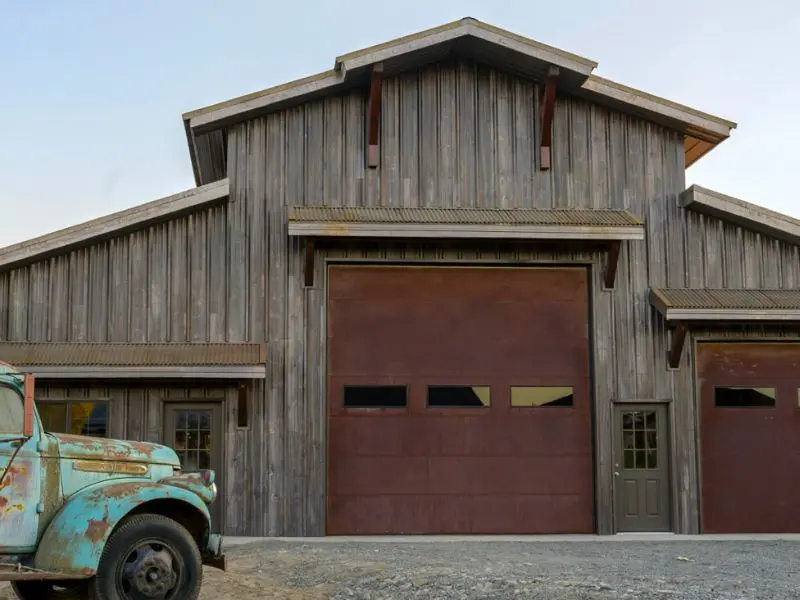
For most pole buildings in our area, 26 gauge metal panels with a Kynar 500 paint system are the best balance of cost, durability, and appearance. The salt air, the storms, and the UV exposure here demand a panel that can take punishment without deteriorating.
For barndominiums where aesthetics drive the decision, we typically recommend metal board and batten or a combination of wainscoting and upper-wall siding to create visual interest while keeping maintenance low.
The right siding choice depends on your budget, your building's purpose, and how much maintenance you are willing to do over the years. We are happy to walk through the options and help you find the right balance for your project.
**Related Reading:**
- 26 Gauge vs 29 Gauge Steel — A deeper look at the steel panels themselves, including gauge, paint systems, and long-term performance.
- Complete Guide to Pole Building Foundations — Before siding goes on, the foundation has to be right. Here is how we build from the ground up.
- Do You Need Post Protection? — The posts behind your siding are doing critical structural work. Learn how we protect them.
- Seasonal Maintenance Checklist — How to care for your siding, panels, and building season by season.
Ready to Start Your Project?
Get expert guidance and a custom quote for your pole building project.