
26 Gauge vs 29 Gauge Steel: Which is Right for Your Pole Building?
Understanding the critical differences between 26 and 29 gauge steel panels can save you thousands in repairs and ensure your pole building stands the test of time.


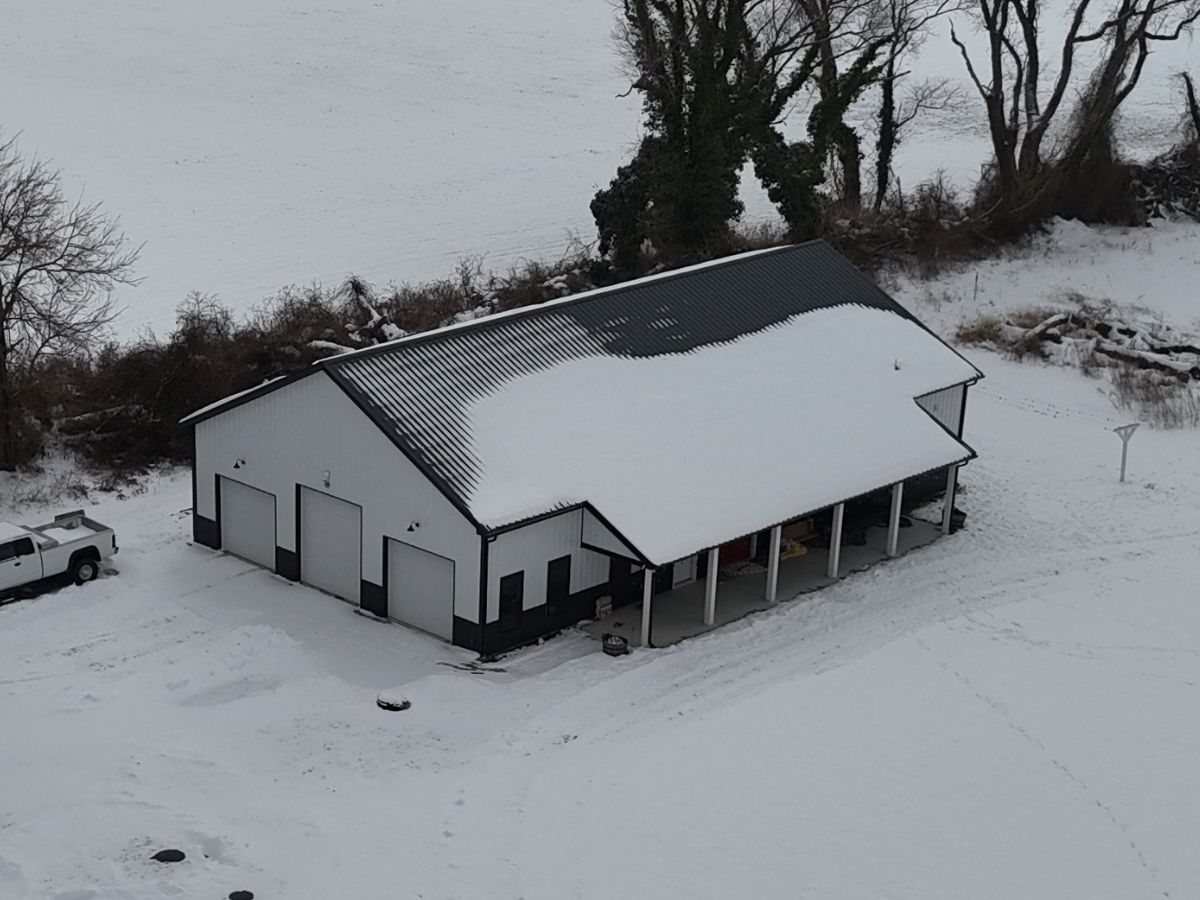
If you have ever gotten a quote for a pole building in Delaware or on Maryland's Eastern Shore, you have probably seen "26 gauge" or "29 gauge" listed on the materials spec. Most people glance at those numbers and move on, because what does steel gauge even mean? It sounds technical, and honestly, a lot of pole barn builders do not bother explaining it.
But this is one of those metal roofing decisions that will affect your pole building for the next 30 to 50 years. It is worth understanding.
The Gauge System (It Is Backwards)
Steel Thickness Comparison
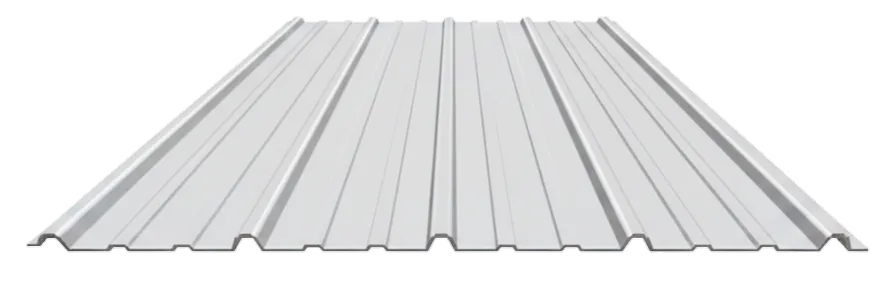
Edge-on panel profile — same shape, different thickness
26 Gauge
~0.82 lbs/sq ft
More rigid, less thermal flex
29 Gauge
~0.63 lbs/sq ft
Lighter, more thermal flex
Higher gauge number = thinner metal. 26 gauge is the heavier, more rigid option.
Here is the part that confuses everyone: with steel gauge, a higher number means thinner metal. 29 gauge steel roofing is thinner than 26 gauge. It seems counterintuitive, but that is how the measurement system works.
To put real numbers on it, 29 gauge steel measures about 0.0142 inches thick and 28 gauge about 0.0149 inches, while 26 gauge comes in at about 0.0179 inches. That difference sounds tiny on paper, but 26 gauge panels are roughly 26% thicker than 29 gauge and about 20% thicker than 28 gauge. When you are talking about the steel roofing and siding panels that protect your entire pole building from weather, impacts, and wear, that percentage matters.
One thing worth noting: steel thickness varies within a given gauge. A panel labeled "29 gauge" might range from 0.0145 to 0.0175 inches depending on the metal building manufacturer. This is why the grade and yield strength of the steel matter as much as the gauge number itself.
What That Thickness Actually Does for You
Impact & Dent Resistance
29 Gauge
More prone to denting
26 Gauge
Resists dents and oil-canning
26 gauge panels hold up significantly better against hail, impacts, and the waviness known as "oil-canning."
The practical difference between 26 and 29 gauge steel panels shows up in three main areas: structural performance, durability, and appearance over time.
Structurally, thicker steel handles wind loads and snow loads better. It resists wind pressure more effectively, carries heavy snow with less deflection, and spans between purlins with more rigidity. In an area like Delaware and the Delmarva Peninsula where nor'easters, coastal storms, and occasional hurricane-force winds are part of life, that structural advantage is not theoretical. It is the difference between metal roofing panels that stay put and panels that get peeled back.
From a durability standpoint, 26 gauge steel is more resistant to dents and impacts. Hail damage is a real concern for pole buildings across Delaware, Maryland, and the Eastern Shore. Thinner gauge panels are more likely to show cosmetic denting after a strong hail event, while 26 gauge panels tend to come through with little to no visible damage.
Then there is oil-canning, that wavy, rippled look that metal panels sometimes develop over time. It is more of a cosmetic issue than a structural one, but nobody wants their pole barn looking warped. Thicker panels are less prone to it.
Understanding Steel Grades
Gauge is only half the story. The grade of the steel, specifically its yield strength, determines how much stress the metal panel can handle before it deforms permanently.
Steel grades are classified by ASTM standards. Full-hard grade steel (ASTM A1018 HSLAS-F Grade 80) has a yield strength of 80,000 PSI. That is the top end. HSLAS Grade 50 comes in at 50,000 PSI, Grade 45 at 45,000 PSI, and commercial quality steel varies between about 40,000 and 50,000 PSI.
The panels we use in our Titan Defender Series are full-hard, 80,000+ PSI yield strength steel. Combined with 26 gauge thickness, that gives you a metal roofing panel with serious structural performance, not just a weather barrier, but an engineered component of your pole building's structural system.
Why This Matters in Our Climate
We build pole buildings in Delaware and on the Maryland Eastern Shore. That means our buildings face hurricane-force coastal winds, heavy snow loads, frequent hail, salt air corrosion near the coast, and temperature swings that cycle metal panels through expansion and contraction thousands of times over their lifespan.
28 and 29 gauge steel performs well for a lot of applications, especially garages, equipment storage, and utility buildings where the priority is solid weather protection on a reasonable budget. Where thicker gauge really earns its keep is in buildings where long-term appearance matters, or where the structure is taking the full brunt of coastal weather year after year.
Paint, Chalking, and Fading: The Long Game

Paint & Finish Longevity
Drag the slider to simulate 40 years of aging on Barn Red metal panels
0 years of Delaware weather
29 Gauge Panel
Like new
26 Gauge Panel
Like new
← Drag to simulate aging →
Our Titan Defender panels use Sherwin-Williams Kynar 500 with a 40-year paint warranty.
How Sherwin-Williams engineers coil coatings for long-term performance
This is something a lot of people overlook when comparing steel gauges for their pole building, and it is one of the biggest real-world differences you will notice after a decade.
What Is Chalking and Why Does It Happen?
Chalking is the gradual breakdown of paint resin on a metal panel's surface. UV radiation from the sun breaks the molecular bonds in the coating's resin, releasing pigment particles as a fine, powdery residue on the surface. You can test for it by running your finger across an older panel. If it comes away with a colored powder, that is chalking.
Several factors accelerate it. UV exposure is the primary driver, which is why south-facing walls and roofs always show it first. Heat amplifies the process. Moisture works its way into micro-cracks in the coating and expands during freeze-thaw cycles, widening those cracks and exposing more surface area to UV breakdown. Salt air and humidity in coastal areas like Delmarva add another layer of stress to the coating system.
The paint chemistry matters too. Lower-quality acrylic and silicone polyester coatings (commonly found on budget panels) break down much faster than fluoropolymer systems like Kynar 500, which use a carbon-fluorine bond that is one of the strongest in organic chemistry. That is why premium coatings resist chalking for 30 to 40+ years while economy finishes can start showing it in under 10.
How Steel Gauge Affects Paint Performance
Every metal roofing panel gets a paint system baked on at the factory. The quality of that system matters, but so does the substrate it is applied to. Thinner 29 gauge panels expand and contract more with temperature swings. Over thousands of thermal cycles, that constant flexing starts to stress the paint bond. Micro-cracks form in the coating surface, tiny fractures you would not notice at first, but moisture works its way underneath. The color starts to chalk, that powdery, washed-out look you see on older pole barns and metal buildings.
On a 26 gauge panel, the thicker steel is more dimensionally stable. It flexes less during thermal cycling, so the paint coating stays bonded and intact for significantly longer. We use Sherwin-Williams Kynar 500 fluoropolymer paint systems on our Titan Defender panels, which carry a 40-year paint warranty. But even the best paint system will not perform as designed on a substrate that is constantly moving underneath it.
To be clear, the metal itself will continue to perform either way. The Galvalume coating that protects the steel from corrosion holds up well on both 26 and 28/29 gauge panels. What changes over time is the appearance. Walk past a 10-year-old pole building with thinner gauge panels and you will often notice the color looks a little softer, a little more washed out, especially on south-facing walls that take the brunt of UV exposure. The same Kynar 500 paint system on 26 gauge panels at the same age will typically still look close to original. It is not about the steel failing. It is about giving the finish system a stable foundation to keep your building looking sharp.
The Cost Question
Yes, 26 gauge steel costs more upfront, typically 15 to 25% more than 29 gauge for the metal panel material. But the long-term math favors it heavily for any pole building you plan to keep.
Thicker panels mean fewer repairs after storms, lower maintenance costs, better insurance rates in many cases, and higher resale value for your pole building. Over a 30 to 50 year building lifespan, the upfront premium usually pays for itself within the first 10 to 15 years, sometimes sooner if you catch a bad hail season on the Delmarva Peninsula.
When Thinner Gauge Makes Sense
There are plenty of situations where 28 or 29 gauge steel is a perfectly good choice. Garages, equipment sheds, hay storage, lean-tos, and utility buildings where function matters more than curb appeal are all solid candidates. These panels still provide reliable weather protection, solid corrosion resistance with Galvalume coatings, and years of dependable service. If you are building a straightforward working structure and want to keep costs in check, thinner gauge panels get the job done.
Where we steer customers toward 26 gauge is when aesthetics are important. Barndominiums, workshops that double as showrooms, commercial buildings with street visibility, or any structure where you want the paint and finish to hold up and look sharp for decades. That is where the thicker steel really pays off.
What We Use and Why
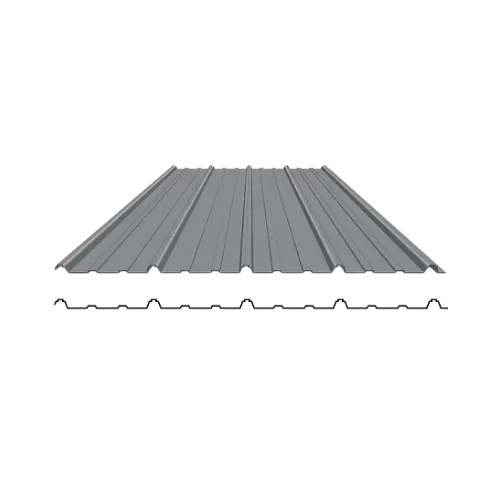
We start every pole building project with 28 gauge steel as our standard panel. It is a solid, reliable choice that performs well for most applications. That said, we always recommend considering the 26 gauge upgrade, and for our barndominium projects, 26 gauge is our default because of the investment involved and the expectation that the building will be a long-term home.
But we leave the final decision up to you. Our Titan Defender Series panels, whether 26 or 28 gauge, all feature premium Galvalume coating for corrosion resistance, high-yield strength steel (80,000+ PSI), a Kynar 500 paint system by Sherwin-Williams, and a 40-year paint warranty. Every panel in the lineup is a serious, engineered building component designed for decades of performance in Delaware and Maryland's challenging coastal environment.
The Honest Answer
Choosing between gauges is not really a debate about whether one panel is "bad" and the other is "good." Both will protect your building and both will last. The difference is in how they age. A 29 or 28 gauge panel will still keep the weather out and the corrosion resistance holds up either way. But the cosmetic side, the color, the gloss, the overall appearance, that is where thicker steel gives you an edge over time. With 26 gauge, you are buying a building that looks newer for longer.
In our climate and for the kind of pole buildings we construct across Delaware and Maryland, we think the 26 gauge upgrade is worth the conversation every time. But it is your building and your budget, and we will build it right either way.
Ready to talk about the right steel panels for your pole building project? Reach out to our team for a conversation and a free custom quote.
**Related Reading:**
- Complete Guide to Pole Building Foundations — The foundation system that supports your steel panels starts below ground. Learn how we build from the footer up.
- Do You Need Post Protection? — Your posts carry the load. Here is how we protect them for 50+ years.
- Choosing the Right Siding for Your Climate — Steel gauge is only part of the equation. Compare metal, board and batten, vinyl, and wainscoting options.
- Seasonal Maintenance Checklist — How to keep your panels and building performing for decades.
Ready to Start Your Project?
Get expert guidance and a custom quote for your pole building project.